How to Choose the Best PE Strapping Machine?
Choosing the right Pe Strapping Machine is not simply a matter of comparing prices. It is a production decision involving package size, strap tension, line speed, operator safety, and maintenance access. A machine that performs well on small cartons may struggle with heavy pallets or uneven loads. The details matter.
Packaging educator Dr. Susan E. M. Selke has emphasized a practical principle: “Good packaging must balance protection, cost, and sustainability.” That principle applies directly to strapping equipment. A suitable Pe Strapping Machine should create consistent seals without crushing fragile boxes or wasting plastic strap. It should also match the facility’s working conditions, including dust, temperature, conveyor height, and daily operating hours.
Watch the machine in real conditions.
Ask for measurable evidence. Check cycle speed, strap width compatibility, tension range, sealing reliability, and expected service intervals. A clear control panel helps reduce training errors. Accessible heating elements and simple strap-path adjustments can shorten downtime. These features may seem minor. They rarely are.
Experience also reveals a less comfortable truth: the fastest machine is not always the best investment. A cheaper model may require frequent adjustments, while an expensive automatic unit may be excessive for a low-volume warehouse. Energy use, spare-part availability, warranty support, and technician response times deserve equal attention.
No selection is perfect. Product mixes change. Operators make mistakes. The best choice is therefore the machine that remains dependable when conditions are less than ideal. This guide explains how to compare Pe Strapping Machine options carefully, using practical criteria rather than impressive specifications alone.
Understanding PE Strapping Machines and Their Main Applications
How to Choose the Best PE Strapping Machine?
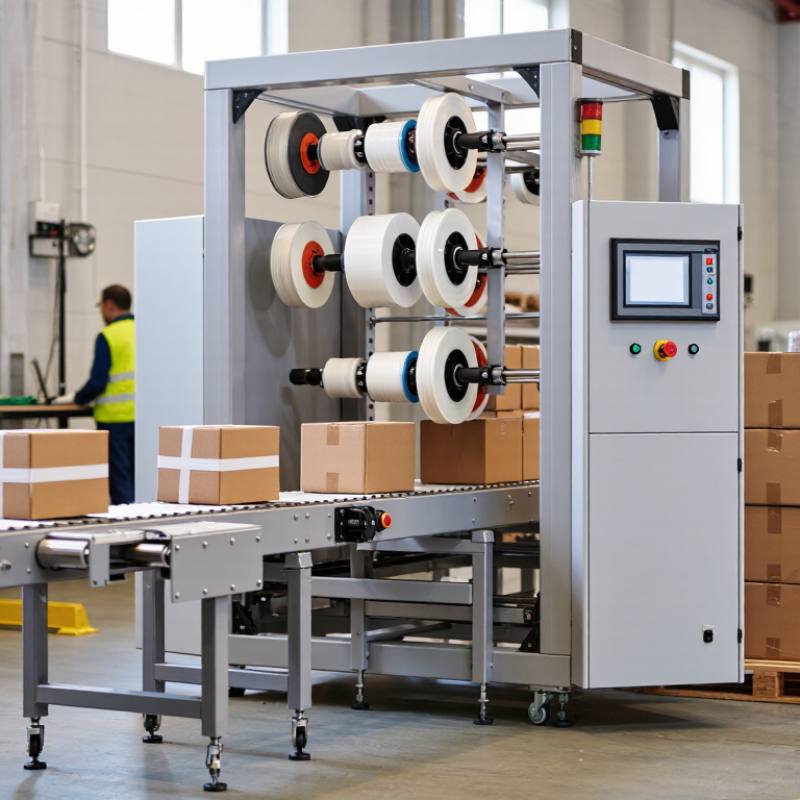
A PE strapping machine uses polyethylene bands to secure cartons, bundles, and palletized goods. It tightens the strap, heat-seals the joint, and cuts the excess material. In daily warehouse work, this process reduces loose packages and uneven loads. It also makes repetitive packing less tiring for operators.
These machines suit food cartons, household products, printed materials, and light industrial parts. Automatic models work well on busy packing lines with consistent package sizes. Semi-automatic models offer more flexibility for smaller warehouses and changing orders. A suitable machine should match strap width, package dimensions, sealing strength, and daily output. Check the available floor space too. A machine that fits the workflow matters more than impressive speed.
Operators should test several real packages before purchasing. A narrow carton may need different tension from a heavy, wide bundle. Excessive tension can crush corners or damage soft products. Low tension may allow the load to shift during handling. I have found that advertised capacity does not always reflect practical conditions. Dust, temperature, operator habits, and strap quality can change performance. Maintenance access is also important, especially around the heating element and cutting area. Simple controls help, but training remains necessary. Mistakes happen. A short trial often reveals problems that a specification sheet cannot.
Assessing Packaging Requirements Before Selecting a Machine
Choosing a PE strapping machine should begin with the packaging requirement, not the machine catalogue. Measure package length, width, height, and weight across a normal production shift. Record the smallest and largest loads. A carton weighing 8 kilograms needs different tension control than a pallet weighing 500 kilograms. Also check whether packages are stable, dusty, cold, or slightly irregular.
Production speed matters, but it is not the only measure. Compare required straps per minute with actual operator movement, conveyor gaps, and changeover time. The Packaging Machinery Manufacturers Institute reported that U.S. packaging machinery shipments reached about $10.2 billion in 2023. Its industry analysis also identifies labor availability and automation skills as important investment drivers. This suggests that simple controls, reliable sensors, and accessible maintenance deserve serious attention. I have seen fast equipment perform poorly when the package flow was inconsistent. Speed alone can mislead.
Tips: Build a one-day packaging profile before requesting quotations. Include average and peak output, strap width, strap thickness, tension range, seal strength, and package temperature. Test the machine with real loads, not perfect samples. Ask for measured cycle times and power consumption. The Sustainable Packaging Coalition stresses that packaging decisions should consider material use and end-of-life conditions. PE strap selection should follow that wider assessment. A recyclable material claim may still fail when contamination is common. That point is easy to overlook.
Comparing Machine Types, Features, and Performance Specifications
Choosing the best PE strapping machine requires more than comparing cycle speed. Semi-automatic machines suit low-volume packing and irregular carton sizes. Operators position the strap manually, then the machine tensions and heat-seals it. Automatic arch machines work better on regular boxes moving along a conveyor. They can deliver consistent strap placement with less manual handling. Side-seal systems are useful for dusty products or low conveyor heights. Small details matter.
Real performance depends on tension control, sealing temperature, strap compatibility, and recovery time. Check the machine’s working range for PE strap width, thickness, and core size. A claimed 30 cycles per minute may fall below 20 in daily production. That happens when cartons arrive unevenly. It is an easy specification to misunderstand. Ask for test data using your actual package dimensions and strap grade. The sealing head should maintain stable pressure, even after repeated cycles.
Industry data supports careful automation decisions. PMMI’s 2024 packaging automation research identifies labor availability and productivity as major investment drivers. The International Federation of Robotics reported 541,302 industrial robot installations worldwide in 2023, showing broader movement toward automated production. Smithers projects the global packaging market will approach 1.2 trillion US dollars by 2028. These figures do not guarantee a return on one machine. Measure labor savings, maintenance hours, rejected seals, and energy use before choosing. A simpler machine can be the wiser purchase. Sometimes, not the fastest.
How to Choose the Best PE Strapping Machine?
Comparing machine types, features, and typical performance specifications
| Machine Type | Typical Throughput | Typical Strap Width | Best Application |
| Hand-held battery | 4–8 cycles/min | 9–16 mm | Low-volume or irregular loads |
| Semi-automatic table-top | 20–30 cycles/min | 5–15 mm | Small and medium packing lines |
| Automatic arch | 35–55 cycles/min | 5–12 mm | Regular cartons and continuous production |
| High-speed integrated system | 50–70 cycles/min | 5–12 mm | High-volume automated packaging |
The chart uses representative midpoint values from commonly specified PE-compatible plastic strapping equipment. Actual output depends on strap size, package dimensions, tension settings, operator loading time, and conveyor integration. Choose the machine type by matching required throughput, load consistency, strap width, tension control, and automation level.
Checking Maintenance Needs, Supplier Support, and Total Ownership Cost
Choosing a PE strapping machine requires more than comparing purchase prices. The machine must match strap width, tension range, package size, and daily production rhythm. Ask how often operators clean the sealing head, tension wheels, sensors, and feed path. Dusty warehouses expose weak maintenance plans quickly. A removable cover and clear access points can reduce service time during busy shifts. Check whether routine parts are available locally and listed with replacement intervals.
Supplier support strongly affects uptime after installation. Request practical evidence: response times, technician coverage, training, spare-part stock, and remote diagnostics. A polished sales promise is not enough. Speak with users running similar loads, not only showroom demonstrations. Ask who pays for travel, emergency labor, software updates, and operator retraining. These details often hide inside service agreements. One weakness deserves honest attention: buyers may underestimate operator habits. Incorrect strap alignment or skipped cleaning can imitate a machine fault.
Calculate total ownership cost over five years, including electricity, consumables, labor, repairs, downtime, and disposal. Compare expected cycles per hour with your actual workload, because unused speed still costs money. A cheaper machine may demand frequent manual adjustments. That difference becomes expensive across several shifts. Use a simple maintenance log. Record stoppage causes, part changes, and service visits before approving the final purchase. Leave room for uncertainty; real factory conditions are rarely as clean as quoted specifications.