How to Choose an Electric Chair for Stairs in 2026?

Choosing an Electric Chair For Stairs in 2026 requires more than comparing prices and battery ranges. The right device must match the user, staircase, home layout, and daily routine. A narrow seat may pass a tight bend, yet feel unstable during transfers. A powerful motor may climb steep steps, but create uncomfortable vibration.

Dr. Rory Cooper, a rehabilitation engineer and accessibility expert, has said, “Assistive technology should support independence in real life.” That principle matters here. An Electric Chair For Stairs should make movement safer, calmer, and more predictable. It should not become another obstacle inside the home.

Look closely at stair width, railings, landings, step height, and available charging space. Measure the user’s weight, hip width, leg length, and transfer ability. Check emergency lowering, seat belts, foot supports, battery backup, and service access. Ask whether the supplier provides an in-home assessment. A showroom demonstration is helpful, but it cannot recreate your staircase.

Small details matter. A glossy control panel may look modern, but large tactile buttons can work better for weak hands. A quiet motor may reduce anxiety during early-morning use. However, no model suits everyone. I would not trust a brochure alone. I would request a trial, inspect the installation path, and ask what happens after a breakdown.

Some choices remain imperfect. Cost, comfort, safety, and installation speed may conflict. The best decision is usually the one that supports repeated, confident use—not the one with the longest feature list.

How to Choose an Electric Chair for Stairs in 2026?

Understanding How Electric Stair Chairs Work

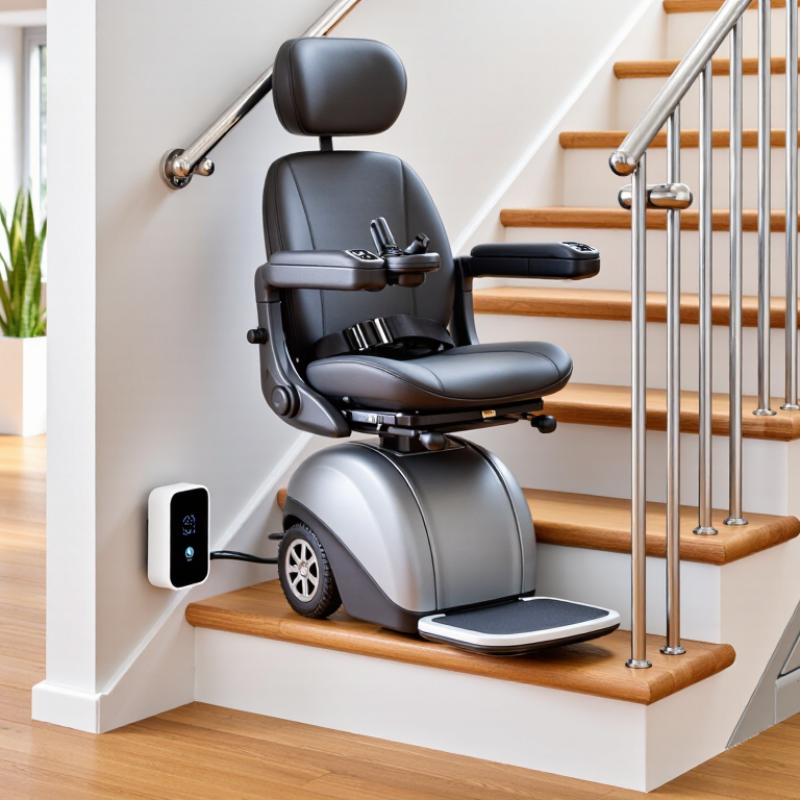
An electric stair chair moves a seated person along a fixed rail beside the staircase. A geared motor drives the chair, while rechargeable batteries supply power during normal use and outages. Sensors should detect obstacles, unsafe positioning, and incomplete locking. The user controls movement through simple buttons or a handheld control.

The mechanism sounds simple. The installation is not. Rail alignment, stair width, landing space, and transfer height affect daily safety. The World Health Organization’s 2022 Global Report on Health Equity for Persons with Disabilities estimates that 1.3 billion people experience significant disability worldwide. That figure reinforces the need for accessible equipment, not rushed purchases. I would measure the stairs with a professional, then test the chair with the actual user’s shoes, clothing, and mobility aids.

Look for a stable seat, a reliable swivel function, visible battery indicators, and manual lowering procedures. Ask for documented testing, maintenance intervals, weight limits, and emergency support. Standards matter, but real homes differ. A narrow landing may still create a difficult turn. A 2021 AARP survey found that 77% of adults aged 50 and older preferred to remain in their current homes, making dependable stair access increasingly practical. Still, preference is not proof of suitability. I would not trust a brochure alone. That choice is easy to regret.

Assessing Stairways, Users, and Safety Requirements

Choosing an electric chair for stairs starts with the stairway, not the showroom. Measure every step, landing, curve, and doorway. Record the narrowest width, because one tight corner can stop installation. Straight stairs need different equipment from curved or split-level stairs. Measure twice. Mistakes happen.

The user’s body and habits matter equally. Record weight, height, leg strength, balance, and transfer ability. Can the user sit down safely without twisting? Can they reach the control and release the belt? The CDC reports that more than one in four older adults falls each year. A stable seat, adjustable armrests, a secure belt, and automatic obstacle sensors are practical safeguards. A caregiver may also need remote controls and a reliable manual-lowering procedure.

Check safety requirements before comparing prices. Ask for a documented site assessment, load testing, emergency stopping, battery backup, and protection during power failure. The International Organization for Standardization’s ISO 9386-2 addresses powered stairlift safety and performance requirements. The World Health Organization’s Global Report on Assistive Technology (2022) estimates that over 2.5 billion people need assistive products worldwide. That figure highlights demand, but not every home suits every device. Door clearance, lighting, handrail position, and landing space still require professional judgment. A brochure cannot reveal every household risk. Personally observing the user on the stairs is often more valuable than a long specification sheet.

Comparing Electric Stair Chair Types and Key Features

How to Choose an Electric Chair for Stairs in 2026?

Comparing Electric Stair Chair Types and Key Features

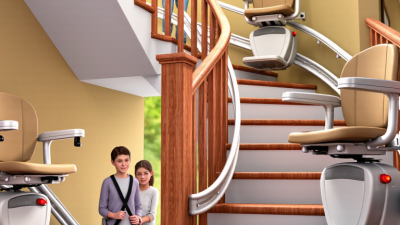
Choosing an electric stair chair begins with the staircase, not the control panel. Straight-rail models suit simple staircases and usually install faster. They move along one continuous track with steady, predictable travel. Curved-rail models follow landings, bends, and multiple floors. They offer better access, but require careful measurement and professional fitting. A platform-style lift may work better for wheelchair users, although it needs more space.

Check the seat width, weight capacity, footrest size, and swivel mechanism. A powered swivel seat can reduce twisting at the top landing. Adjustable armrests help users sit securely. Look for obstruction sensors, a seat belt, emergency stopping controls, and battery backup. Test the controls with limited hand strength. Small buttons may look neat, but they can feel awkward in real use.

I once assumed a compact design was always safer. That was not quite right. A narrow stairway can make boarding difficult, even when the chair fits. Ask a qualified installer to assess rail clearance, landing space, wall strength, and electrical access. An occupational therapist can also review posture and transfer risks. Battery performance may change in cold or poorly maintained conditions. Request clear maintenance intervals and written safety instructions. Keep a little landing space unused; daily movement rarely follows perfect measurements.

Checking Installation, Controls, Battery Life, and Maintenance

Choosing an electric stair chair in 2026 starts with the staircase, not the screen. Measure every landing, bend, and doorway with a steel tape. A qualified installer should check rail clearance, wall strength, seat height, and the user’s transfer path. Ask for a written installation assessment. A rushed fitting can leave the chair scraping trim or blocking a narrow landing. I once underestimated a landing’s turning space; the drawing looked fine, but the real hallway felt tight.

Controls should remain usable with stiff fingers, limited reach, or weak vision. Test the armrest switch, remote control, emergency stop, and manual lowering feature before paying. Buttons need clear feedback. Keep controls reachable from the seat and both landings. Ask whether obstacle sensors work consistently and whether charging occurs in a safe, convenient position. Do not assume “automatic” means effortless; settings still need checking after installation.

Battery life depends on travel distance, rider weight, temperature, and charging habits. Request a realistic cycle estimate, not a best-case number. Confirm a full charge during a practical test. Learn warning-light patterns and the replacement schedule from the service technician. Wipe the rail weekly, keep the seat belt clean, and investigate unusual noises early. Schedule professional maintenance according to the manual. My weak point is consistency; a reminder prevents missed charging and small faults from becoming inconvenient failures.

How to Choose an Electric Chair for Stairs in 2026?

Use this practical decision-weighting model to compare stair-chair options. Installation fit, control accessibility, battery performance, and maintenance support should all be checked before purchase.

How to use the chart: Treat the percentages as a planning framework rather than market statistics. Confirm stair width, track layout, user controls, charging location, battery specifications, service access, and emergency operation with a qualified installer.

Evaluating Costs, Accessibility Standards, and Supplier Support

How to Choose an Electric Chair for Stairs in 2026?

Cost is more than the chair’s purchase price. Installation, electrical work, maintenance, and future battery replacement also matter. Request an itemized quotation before comparing suppliers. A low quote may look sensible, but it can hide difficult installation work or limited after-sales service. Measure stair width, landing space, user weight, and transfer areas carefully. A qualified assessor should inspect the staircase in person, not rely only on photographs.

Accessibility standards vary by location, so confirm the product meets applicable safety, electrical, and building requirements. Ask for documentation, user instructions, risk assessments, and installer qualifications. Features such as seat belts, obstruction sensors, emergency lowering, swivel access, and battery backup can improve daily safety. However, more features are not automatically better. The user must operate them confidently.

Tips: Ask about response times for breakdowns, replacement-part availability, warranty exclusions, and servicing fees. Get support terms in writing. Test the controls slowly, including during a simulated power failure. If possible, speak with an independent accessibility professional before signing. Supplier support is often overlooked. A reliable provider should explain limitations clearly, offer a realistic installation schedule, and provide accessible telephone or in-home assistance. Do not assume every technician is equally experienced. Ask who handles urgent repairs and whether service continues after the warranty ends.

How to Choose an Electric Chair for Stairs in 2026? – Evaluating Costs, Accessibility Standards, and Supplier Support
Evaluation Dimension Typical 2026 Benchmark or Requirement What to Check Before Purchase Accessibility and Safety Relevance Supplier Support Questions
Straight indoor stairlift Typical installed cost: approximately US$2,500–US$7,500, depending on rail length, seat configuration, installation complexity, and warranty. Confirm whether the quotation includes the rail, batteries, installation, electrical work, removal of packaging, training, and taxes. Usually the simplest configuration, with fewer moving rail sections and fewer potential obstructions. Ask for the normal installation lead time, emergency response process, and the expected availability of replacement batteries and controls.
Curved or multi-flight stairlift Typical installed cost: approximately US$8,000–US$15,000 or more. Custom surveying and made-to-measure rails are major cost factors. Request a measured drawing showing landings, bends, intermediate stops, parking positions, and minimum clearances. Can be adapted to complex stair layouts, but the rail design may affect corridor width and access to doors or landings. Verify who handles design changes, site measurement, final commissioning, and future rail or control-system repairs.
Outdoor installation Often costs more than a comparable indoor model because of weather-resistant materials, protective covers, drainage, and electrical protection. Check the stated operating temperature, corrosion protection, water-resistance rating, charging arrangements, and anchoring method. Outdoor steps may be wet, icy, uneven, or poorly lit. The chair should not be treated as a substitute for handrails, lighting, or safe walking surfaces. Ask whether outdoor servicing is included, how quickly weather-related faults are handled, and whether seasonal inspections are recommended.
User weight and seat dimensions Many standard models support roughly 120–160 kg; heavy-duty options may support more. The exact limit is model-specific. Confirm the rated load, seat width, seat height, footrest size, armrest spacing, and whether the rating changes on steep or curved stairs. The published load limit must include the user, clothing, and any carried item. A suitable seat position can reduce transfer and fall risk. Request a supervised trial or demonstration, especially where the user has limited hip, knee, trunk, or hand mobility.
Stair width and clearance Many products can fit staircases around 740–760 mm wide, but the required width varies by design, seat position, rail, and landing layout. Have the supplier measure the narrowest point, newel posts, door swings, handrails, skirting boards, and turning areas. The folded chair should leave a safe walking route where possible. Local building or fire-safety rules may require a minimum escape route. Ask for a written clearance plan and confirmation of who is responsible if the proposed installation obstructs an exit or doorway.
Battery and power system Rechargeable batteries are commonly used so the chair can complete trips during a short power interruption. Battery life is commonly measured in years, not guaranteed indefinitely. Check charging locations, charging indicators, battery replacement cost, expected battery service life, and operation during a power cut. The user should not be stranded solely because mains power is interrupted. A clear low-battery warning and accessible controls are important. Confirm whether battery replacement is included in the warranty and whether the supplier keeps compatible batteries in local stock.
Controls and transfer access Useful controls generally include armrest controls, remote call/send controls, emergency stop functionality, and a seat swivel or transfer aid where appropriate. Test control force, button size, visibility, direction labels, remote placement, swivel locking, and footrest operation. Controls should be usable by people with reduced grip strength, visual limitations, tremor, or one-sided weakness. Ask whether controls can be configured for left- or right-hand use and whether replacement remotes can be supplied separately.
Safety features Look for a seat belt, obstruction sensors, overspeed protection, braking control, end-of-rail stopping, battery monitoring, and a manual lowering or recovery procedure where applicable. Request the user manual, risk assessment, installation certificate, maintenance instructions, and details of all safety interlocks. Safety systems should reduce risks from objects on the stairs, incorrect positioning, unintended movement, and loss of power. Ask how faults are reported, whether remote diagnostics are available, and what the safe recovery procedure is after a stoppage.
Applicable standards Depending on location and product type, verify conformity with relevant requirements such as ISO 9386-2 for powered stairlifts, EN 81-40 where applicable, and the electrical and building rules adopted locally. Do not rely only on a general “CE,” “UKCA,” or “compliant” statement. Request the declaration of conformity, applicable test reports, and installation documentation. Product standards address design and safety; they do not automatically guarantee that every home installation meets local fire, electrical, structural, or access requirements. Ask which edition of each standard was used, who performed conformity assessment, and whether local authority approval is needed.
Accessibility legislation In the United States, the ADA generally applies to covered public facilities and does not create a universal residential stairlift specification. Other regions have different rules. Separate product safety compliance from building accessibility obligations, tenancy rules, planning requirements, and local electrical regulations. A stairlift may improve access without making the whole building accessible. Door widths, bathroom access, entrances, and emergency egress should also be assessed. Ask the supplier to identify which requirements are legally applicable to the specific property rather than making a broad accessibility claim.
Installation quality Installation normally requires a site survey, secure rail fixing, electrical connection or charging-point setup, operational testing, and user instruction. Obtain a written scope of work, installer qualifications, expected disruption, protection of flooring and walls, and post-installation testing arrangements. Incorrect rail alignment, loose fixings, poor charging placement, or inadequate clearance can create avoidable hazards. Confirm whether the installer is trained for the exact model and whether a completion certificate is provided.
Warranty and service coverage Warranty periods vary by component and supplier. A longer headline warranty may exclude batteries, labor, travel, misuse, or outdoor exposure. Compare coverage duration, exclusions, labor charges, call-out fees, transferability, and the process for approving warranty repairs. Reliable service is particularly important when the user cannot safely use the stairs without the equipment. Ask for guaranteed response times, out-of-hours arrangements, local technician coverage, and escalation procedures.
Maintenance and operating cost Budget for periodic inspection, cleaning, battery replacement, possible call-out fees, and electricity use. Curved and outdoor systems may require more specialized service. Request a five-year ownership estimate that separates scheduled maintenance, consumables, repairs, travel, and optional service plans. Regular maintenance helps preserve braking, sensors, batteries, charging contacts, seat rotation, and rail operation. Check whether maintenance is performed by the original installer, an authorized service provider, or an independent contractor.
Rental, refurbished, or new equipment Rental or refurbished equipment can reduce upfront cost, but curved rails are usually made for a particular staircase and may have limited reuse value. For refurbished equipment, verify inspection date, replaced parts, battery condition, remaining warranty, and compatibility with the existing rail. Lower price should not mean accepting missing safety documentation, unsuitable dimensions, or unclear ownership of maintenance responsibilities. Ask who owns the equipment, who pays for removal or relocation, and whether service continues if the supplier stops trading.
Supplier comparison method Obtain at least two or three written quotations based on the same measured staircase and user requirements. Compare total installed price, specification, standards evidence, warranty, service response, maintenance cost, and cancellation terms—not only the monthly payment. A technically suitable product with dependable local support is often safer than the lowest-priced option with uncertain servicing. Request references for similar stair layouts, proof of insurance, complaints procedure, and a clear contact person after installation.
Final decision checklist Choose only after confirming fit, user comfort, rated load, safe transfer, power-failure behavior, documentation, installation quality, and long-term support. The final quotation should identify the exact configuration, measurements, included work, exclusions, payment schedule, warranty, and service terms. A qualified occupational therapist or access specialist may help assess posture, transfers, cognitive needs, and whether a stairlift is the most appropriate solution. Keep the manual, conformity documents, installation certificate, service records, emergency contact details, and warranty paperwork in an accessible place.